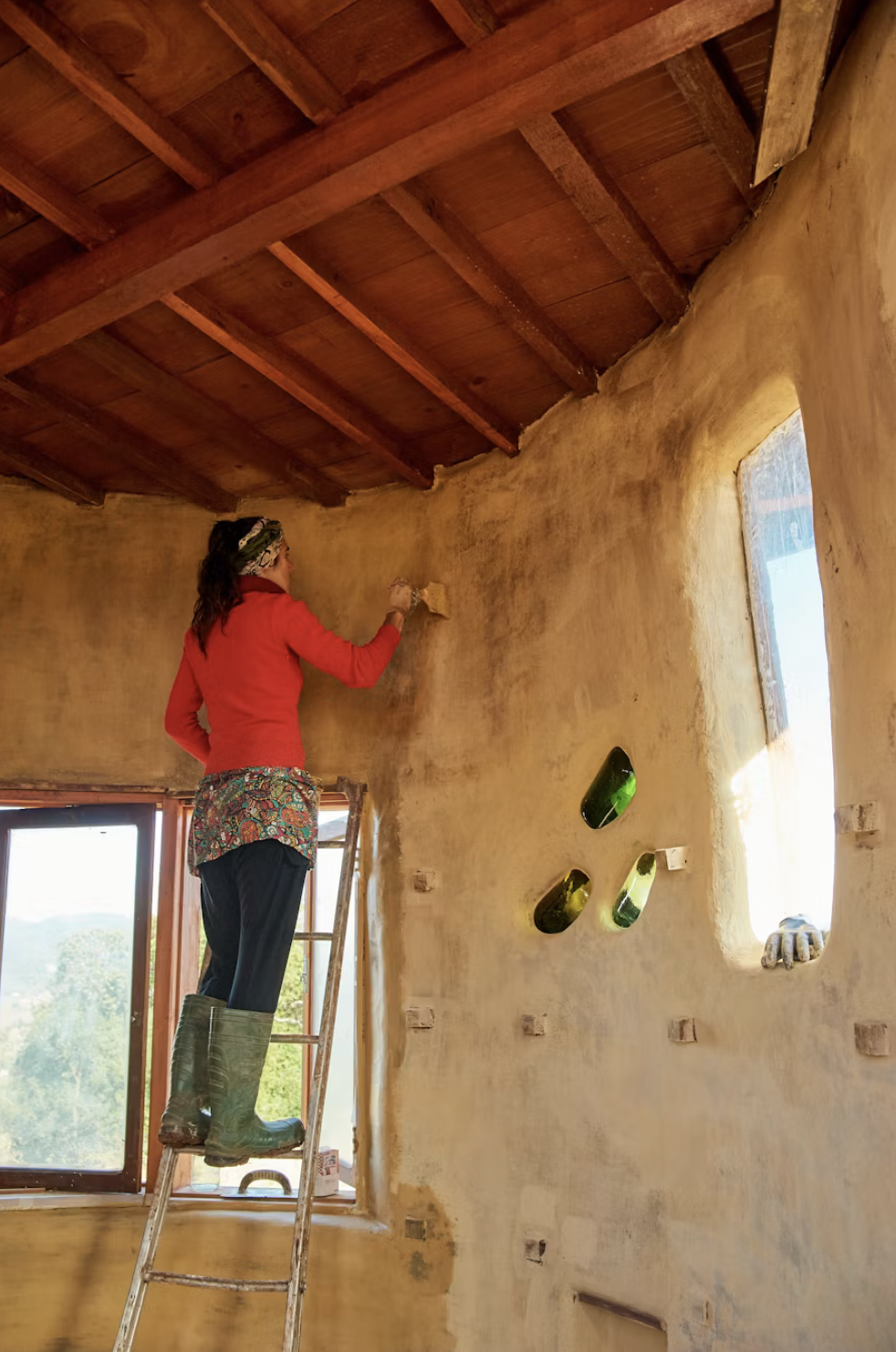
Material choices shape more than the appearance of a home. They influence indoor air quality, embodied carbon, durability, maintenance and what happens when a room is renovated years from now. No material is automatically sustainable in every climate or application, which is why context and credible documentation matter more than fashionable labels. The best specifications use fewer materials, keep assemblies simple and favor products that can be repaired, separated and reused. This guide offers a practical way to compare options without expecting perfection from any single product.
Start by asking whether you need something new
The lowest-impact material is often the one already in place. Before replacing floors, cabinets, doors or structural elements, ask whether they can be cleaned, repaired, refinished or adapted. Reuse avoids new manufacturing and keeps useful materials out of the waste stream.
Judge the whole life of a material
- Embodied carbon: emissions from making, transporting and installing the material.
- Health: substances released during installation and use.
- Durability: how long the material performs in its actual location.
- Repairability: whether damaged components can be replaced individually.
- End of life: potential for reuse, recycling, composting or safe disposal.
Wood: renewable, but not automatically responsible
Wood stores biogenic carbon and can replace more energy-intensive materials. Its advantages depend on responsible forestry, efficient processing, moisture protection and a long service life. Look for credible certification and consider reclaimed lumber. For indoor engineered products, request emissions information about adhesives and finishes.
Concrete, masonry and earth
Concrete is durable and useful for structure and thermal mass, but conventional cement production carries substantial carbon emissions. Reduce impact by optimizing quantities and considering lower-clinker mixes where technically appropriate.
Brick and stone can last for generations and may be salvaged. Earth-based finishes and blocks can offer low toxicity and humidity buffering, but they must suit local rain, freeze-thaw conditions and code requirements.
Insulation: performance and health together
Insulation saves operational energy for decades, so manufacturing impact is only part of the equation. Cellulose, wood fiber, cork, mineral wool, fiberglass and foams have different strengths. Compare thermal performance, fire behavior, moisture tolerance, recycled content, installation safety and blowing agents.
Metals, glass and recycled content
Steel and aluminum require significant production energy but are strong, durable and widely recyclable. Use them efficiently and design mechanical connections for future disassembly.
Large glass areas can increase heating and cooling loads. Treat windows as carefully placed openings for daylight, views and ventilation rather than a default wall material.
Finishes, paints and adhesives
Interior finishes are close to occupants and cover large areas. Choose products with transparent ingredients and low emissions. “Natural” does not always mean harmless, and “low-VOC” does not address every chemical concern.
Prefer finishes that can be renewed in place. Mechanically fastened flooring, panels and trim are easier to repair and recover than permanently bonded layers.
Use documentation, not vague claims
Environmental Product Declarations, Health Product Declarations, certified forestry documents and independent emissions tests make comparisons more transparent. Be cautious with terms such as eco-friendly, green or non-toxic when no standard or evidence is supplied.
Design for maintenance and change
Buildings last longer when water can drain, assemblies can dry and vulnerable layers can be inspected. Keep services accessible, separate short-lived finishes from long-lived structure and use replaceable parts in high-wear areas.
Adaptable rooms and reversible connections reduce future demolition. A home able to respond to changing households and technology avoids repeated cycles of construction.
A simple material checklist
- Can an existing material be retained or reused?
- Can the quantity be reduced?
- Will it perform safely in the local climate?
- Are ingredients, emissions and impacts documented?
- Can it be repaired and separated for reuse?
- Is there a local lower-impact alternative with comparable durability?
The practical takeaway
Sustainable material selection is a process, not a shopping category. Keep what works, reduce unnecessary layers, prioritize durability and health, and ask for evidence behind environmental claims.
Compare products on the same basis
Marketing claims are difficult to evaluate when one company discusses recycled content and another emphasizes low emissions. Create a simple comparison sheet for each major material: quantity required, service life, verified emissions data, chemical disclosures, maintenance, origin, installation waste and end-of-life options. Environmental Product Declarations and health-product disclosures are useful, but they are inputs to a decision rather than automatic approval.
Pay particular attention to adhesives, coatings, sealants and composite products. They may represent a small share of the project by weight while strongly affecting indoor air and whether components can be separated later.
Use a project-level material hierarchy
- Keep and repair what already performs.
- Reduce the amount of new material through efficient design.
- Source reclaimed or reused components where quality can be verified.
- Choose durable, low-emission products suited to the assembly.
- Design connections for maintenance, replacement and future disassembly.
A beautiful low-impact interior often comes from restraint: fewer finishes, honest materials and details that age well. Mock up important junctions, request samples in advance and record product names and care instructions for the future owner.
Continue exploring on Flowers of Vice